
Quick Answers
Who are the Traditional Owners of Green Island?
Green Island and its waters are part of the sea country of the Gimuy Walubara Yidinji people, the Traditional Owners of the Cairns coastal region.
How did Green Island get its name?
James Cook named it during his 1770 voyage, after Charles Green, a member of the Endeavour’s crew, and not after its greenery.
When did it become a national park?
In 1937. That protection is why tourism and conservation sit side by side on the island today, with development kept limited.
“Green Island has been inhabited, visited, named, and returned to for thousands of years — and it holds its history quietly, the way islands do.”
Millennia of History on a Tiny Coral Cay
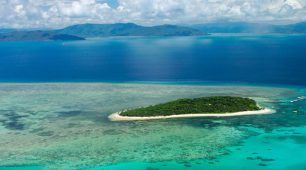
Green Island appears small on a map, less than two kilometres across at its widest point. But its history spans thousands of years, encompassing Indigenous sea country relationships, colonial exploration, the pearl diving era, a period as a tourist destination in the early twentieth century, and the transition to a protected national park with a resort nestled within its forest. Every layer of this history is present in some form on the island today.


Gimuy Walubara Yidinji — Country of the First Peoples
Long before Europeans arrived in Queensland, Green Island and its surrounding waters formed part of the sea country of the Gimuy Walubara Yidinji people, the Traditional Owners of the Cairns coastal region. The island and its reefs were a resource and a place of cultural significance for these communities across generations, connected to the mainland by the same ocean that now brings tourists on catamaran ferries. The First Nations connection to Green Island predates European contact by at least 60,000 years.
European Discovery and Naming
Green Island was named by Lieutenant James Cook during his 1770 voyage along the east coast of Australia. Cook’s Endeavour passed through the area in June 1770 as he navigated the treacherous inner passage of the Great Barrier Reef. Cook named the island after the Endeavour’s astronomer, Charles Green. European maritime activity in the area increased significantly in the nineteenth century, with pearling and bechede-mer (sea cucumber) harvesting operations working the reefs of the far north Queensland coast.


The Era of Tourism
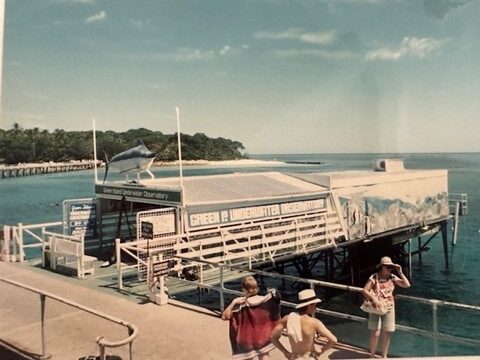
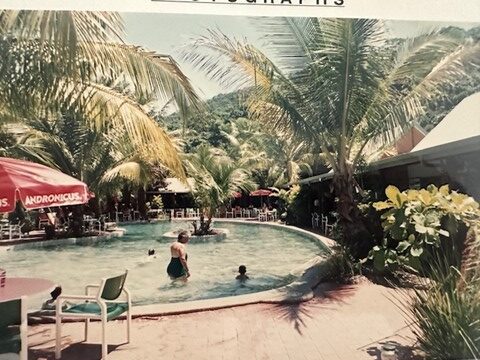
Green Island began attracting day visitors from Cairns in the early twentieth century, when boat services began running regular excursions to the island. By the 1950s and 1960s, Green Island had become an established tourist destination, with a small resort and the Marineland Melanesia attraction. The development of comfortable ferry services transformed it into one of Queensland’s premier day trip destinations.
National Park Status
Green Island was declared a national park in 1937, and the surrounding waters became a marine park in 1974. This status has been fundamental in shaping what the island is today: a place where tourism and conservation coexist within a protected framework, where development is limited, and where the forest and reef environments are maintained in as natural a state as possible given the volume of visitors the island receives.
A Hot Getaways destination. Where Care is Our Compass.
Frequently Asked Questions
How old is Green Island?
As a coral cay, Green Island formed gradually over thousands of years as coral and sand accumulated on the reef platform. It has a long human history too, holding cultural significance for the region’s Traditional Owners well before European contact.
Who are the Traditional Owners connected to Green Island?
Green Island lies within the sea country of the region’s First Peoples, and it holds cultural significance for Traditional Owner groups of the Cairns area. Visitors are encouraged to treat the island and its environment with respect.
How did Green Island get its name?
The island was named by Europeans during early navigation of the coast, taking its name from Charles Green, the astronomer on James Cook’s Endeavour, rather than from its greenery. The rainforest and vegetation that give it a green appearance are a happy coincidence of the name.
When did Green Island become a tourist destination?
Green Island has been a popular visitor destination for many decades, growing over the twentieth century into one of the most accessible parts of the Great Barrier Reef to visit from Cairns. Its combination of reef, rainforest and beach made it an early favourite.
Is Green Island protected today?
Yes. Green Island and its surrounding reef are protected, with the island holding national park status and the reef lying within the Great Barrier Reef Marine Park. These protections help conserve its rainforest, marine life and coral for future generations.
Travel Kindly
At Hot Getaways, care is our compass — and a little kindness makes every journey better. When you visit Green Island, we gently ask you to:
- Protect the reef — wear reef-safe sunscreen and never touch or stand on the coral.
- Respect the wildlife — admire the turtles, seabirds and marine life from a distance, and take your rubbish home with you.
- Support local — choosing local operators, cafés and guides helps this beautiful place thrive.
- Honour Country — we travel on the traditional lands and sea Country of Australia’s First Peoples, with gratitude and respect to the Traditional Custodians past and present.
- Be kind to each other — a smile, a little patience and a helping hand make the day lovelier for everyone.
Small acts of care add up to something wonderful. Thank you for travelling kindly.