Quick Answers
Do I need to be a strong swimmer?
No. Comfort in the water helps, but flotation vests and calm shallow water let beginners build confidence. Start where you can stand, and tell staff if you’re unsure.
How do I stop my mask leaking?
Leaks are usually a fit problem. At the hire desk, try masks until one stays sealed when you breathe gently in through your nose without the strap on.
What’s the most common beginner mistake?
Tensing up and breathing too fast. Float, breathe slowly and steadily through the snorkel, and never stand on or hold the coral for balance.
“Snorkelling for the first time is one of those moments where the world suddenly has a dimension you did not know was there.”
Your First Time Snorkelling: A Practical Guide for Beginners at Green Island
Green Island is one of the best places in the world to snorkel for the first time — calm water, a reef that begins just metres from the beach, and friendly marine life that does not require you to chase it. The right preparation makes all the difference between an experience that is frustrating and one that is genuinely transformative.


Getting the Right Fit
The most common beginner snorkelling problem is a leaking mask, which is almost always caused by poor fit. At the equipment hire desk, try on several mask sizes until you find one that creates an airtight seal against your face without needing to grip the strap tightly. Test it by pressing the mask against your face without the strap and inhaling gently through your nose — it should stay in place without effort. A well-fitting mask makes snorkelling significantly more comfortable and enjoyable.
In the Water for the First Time
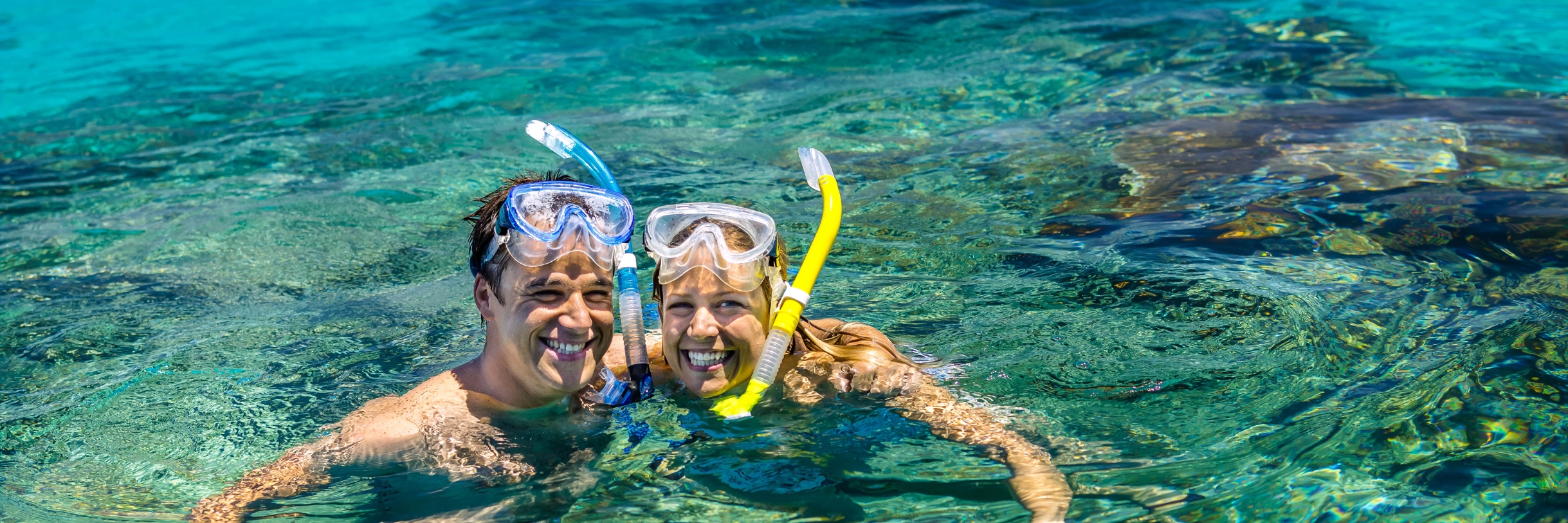
Start in shallow water near the beach, where you can stand up if you feel uncertain. Put your face in the water and practice breathing calmly through the snorkel before attempting to swim. Many first-time snorkellers hold their breath without realising it — remind yourself to breathe steadily and continuously. Keep your body as horizontal as possible: floating with minimal effort reduces fatigue and positions you correctly above the reef without standing on it. Use gentle, wide fin kicks rather than small, fast movements.
Common Mistakes to Avoid
Tensing up is the most common beginner problem — it makes breathing harder and increases fatigue. If you feel anxious, stand up, take a few normal breaths, and start again. Touching the reef or standing on coral is both harmful to the ecosystem and uncomfortable — the surface is sharp and rough. Kicking too deep stirs up sediment that obscures visibility. Wearing sunscreen that is not reef-safe is harmful to the coral. All of these are avoidable with a little awareness.
What to Look For
Once you are comfortable in the water, the reef reveals itself gradually. Start by noticing the coral formations themselves — the shapes and textures of different species. Then notice the fish moving through and around the coral. Then look for the less obvious things: the octopus flattened against a rock, the giant clam partially open, the sea turtle resting motionless on the bottom. Patience and slow movement are rewarded with increasingly extraordinary observations.
A Hot Getaways destination. Where Care is Our Compass.
Frequently Asked Questions
Do I need to know how to swim to snorkel at Green Island?
Basic swimming ability and comfort in water help a lot, but you don’t need to be a strong swimmer to start. Flotation vests and calm shallow areas let beginners build confidence, and staying where you can touch the bottom is a good starting point. Let staff know if you’re unsure in the water.
How do I stop my mask from fogging up?
A common beginner tip is to apply a small amount of anti-fog solution or even a little saliva to the inside of a dry lens, then rinse briefly before wearing. A well-fitted mask that seals without being too tight also fogs and leaks less. Ask your operator if anti-fog is available.
What’s the most common mistake beginners make?
Breathing too fast and tensing up. Relaxing, breathing slowly and steadily through the snorkel, and floating calmly makes everything easier. Beginners also often over-tighten the mask or touch the reef for balance — instead, float, take your time and keep your hands to yourself.
How do I breathe properly through a snorkel?
Breathe slowly and deeply through your mouth, keeping the snorkel tip above the surface. Practising with your face in shallow water first helps you get used to the sensation. If water enters the tube, a sharp exhale clears it. Staying calm and unhurried is the key to comfortable breathing.
What should I look for on my first snorkel at Green Island?
Start by getting comfortable floating and breathing, then look for colourful reef fish, giant clams, coral formations and perhaps a sea turtle. Because the fringing reef is close to shore, beginners can see plenty without going far. Take it slowly and enjoy simply watching the reef come to life.
Travel Kindly
At Hot Getaways, care is our compass — and a little kindness makes every journey better. When you visit Green Island, we gently ask you to:
- Protect the reef — wear reef-safe sunscreen and never touch or stand on the coral.
- Respect the wildlife — admire the turtles, seabirds and marine life from a distance, and take your rubbish home with you.
- Support local — choosing local operators, cafés and guides helps this beautiful place thrive.
- Honour Country — we travel on the traditional lands and sea Country of Australia’s First Peoples, with gratitude and respect to the Traditional Custodians past and present.
- Be kind to each other — a smile, a little patience and a helping hand make the day lovelier for everyone.
Small acts of care add up to something wonderful. Thank you for travelling kindly.