Quick Answers
What are the most important reef rules?
Never stand on or touch coral, don’t touch, handle or chase marine life, keep fin kicks gentle, and take all your rubbish back on the ferry.
What sunscreen should I use?
A reef-safe mineral sunscreen based on zinc oxide or titanium dioxide, applied well before you swim. A rash vest and hat protect you with less sunscreen in the water.
How do I stay safe in the water?
Never snorkel alone, stay within your limits and the designated swimming areas, wear protective swimwear in stinger season, and follow the advice given on the island on the day.
“Responsible reef travel is not about restriction — it is about understanding that the best way to preserve the experience is to care for what makes it extraordinary.”
Reef Safety and Responsible Travel at Green Island
Green Island sits within the Great Barrier Reef Marine Park — one of the most significant protected marine areas in the world. Visiting responsibly is not just an ethical consideration; it is a practical one. The reef’s health directly determines the quality of the experience it provides. Every visitor who cares for the reef contributes to its ability to continue offering these experiences to future visitors.


In the Water
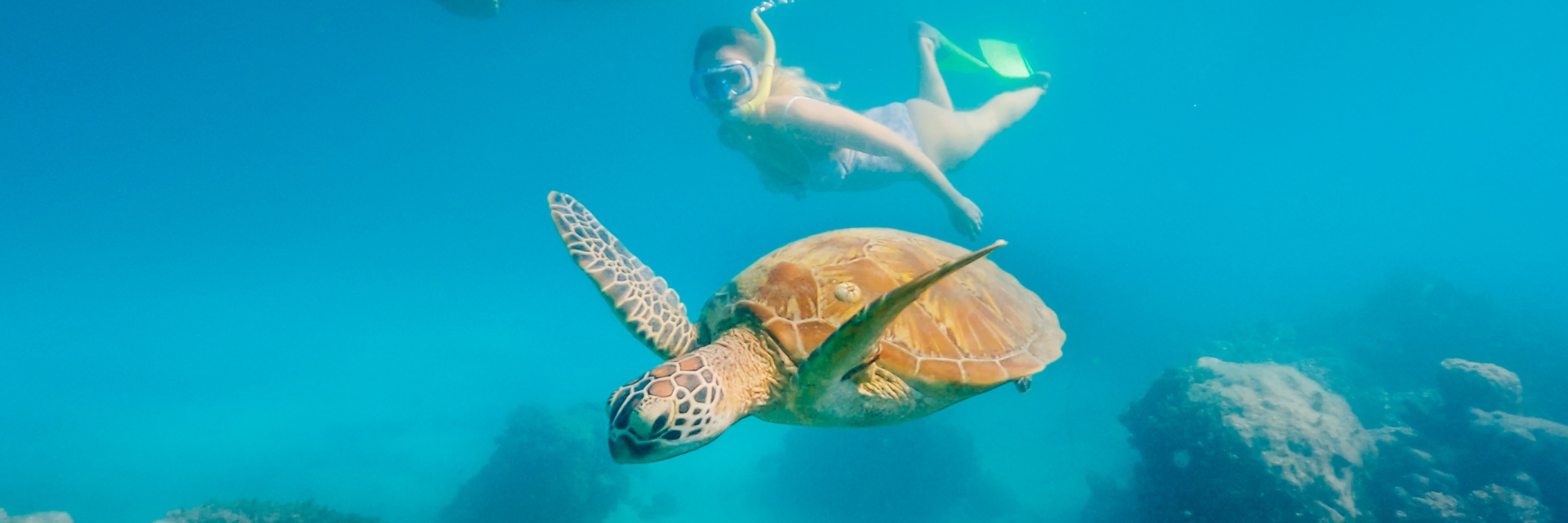
The most important reef safety rules are also the most reef-protective ones. Never stand on coral — it is a living animal and even brief contact can damage or kill a colony. Do not touch, handle, or chase marine life, including sea turtles, reef sharks, and fish. Keep fin kicks gentle and directed upward to avoid disturbing the seabed. Avoid stirring up sand near coral formations. If you are uncertain about your buoyancy, use a flotation vest — it helps you stay horizontal and reduces the risk of accidental contact with the reef below.
Sunscreen and Chemical Awareness
Chemical UV filters in many commercial sunscreens (particularly oxybenzone and octinoxate) are harmful to coral and have been shown to contribute to bleaching even at very low concentrations. Reef-safe mineral sunscreens (zinc oxide or titanium dioxide based) are strongly recommended for all reef visits. Physical sun protection — a rash vest, hat, and UV-protective clothing — is the most reef-responsible approach and also the most effective for prolonged sun exposure.
Single-Use Plastics and Marine Litter
All waste generated during a reef visit should leave with you on the return ferry. Plastic bags, straws, bottles, and packaging are major sources of marine pollution and can cause severe harm to reef wildlife, particularly sea turtles, which mistake plastic bags for jellyfish. Carry a reusable water bottle and reduce single-use packaging wherever possible. The island has rubbish facilities — use them.
Personal Safety
Green Island’s reef conditions are generally gentle, but standard water safety rules apply. Never snorkel alone. Know your limits and return to shore before becoming fatigued. Maintain awareness of other swimmers and snorkellers around you. Stay within the designated swimming areas. If conditions deteriorate (increasing wind, changed currents, reduced visibility), exit the water calmly. The island’s activity staff are trained to assist and monitor conditions throughout the day.
A Hot Getaways destination. Where Care is Our Compass.
Frequently Asked Questions
What is reef-safe sunscreen and why does it matter at Green Island?
Reef-safe sunscreen avoids certain chemicals, such as oxybenzone and octinoxate, that can harm coral. Because Green Island’s reef sits right at the shore, sunscreen easily washes into the water, so choosing a reef-safe product and applying it well before entering the sea helps protect the coral.
Is it safe to touch or stand on the coral?
No. Touching, standing on or collecting coral damages the reef and can also injure you. Coral is a living animal that grows very slowly, so keep a respectful distance, float rather than stand, and look without touching to help keep the reef healthy.
How can I reduce my impact on the reef during my visit?
Use reef-safe sunscreen, avoid single-use plastics, take all rubbish with you, keep your distance from turtles and other wildlife, and never feed marine life. Following operator and Marine Park guidance ensures your visit leaves the reef as you found it.
What personal safety precautions should I take in the water?
Swim and snorkel within your ability, stay aware of tides and conditions, and wear protective swimwear during stinger season. Snorkelling with a buddy and staying in supervised or recommended areas adds a margin of safety. Always follow the current advice given on the island.
Why is responsible travel important at a place like Green Island?
Green Island is a protected coral cay and national park within the Great Barrier Reef Marine Park. The rainforest, reef and wildlife are fragile, so travelling responsibly — treading lightly, respecting wildlife and minimising waste — helps preserve the island for future visitors and the ecosystems that depend on it.
Travel Kindly
At Hot Getaways, care is our compass — and a little kindness makes every journey better. When you visit Green Island, we gently ask you to:
- Protect the reef — wear reef-safe sunscreen and never touch or stand on the coral.
- Respect the wildlife — admire the turtles, seabirds and marine life from a distance, and take your rubbish home with you.
- Support local — choosing local operators, cafés and guides helps this beautiful place thrive.
- Honour Country — we travel on the traditional lands and sea Country of Australia’s First Peoples, with gratitude and respect to the Traditional Custodians past and present.
- Be kind to each other — a smile, a little patience and a helping hand make the day lovelier for everyone.
Small acts of care add up to something wonderful. Thank you for travelling kindly.